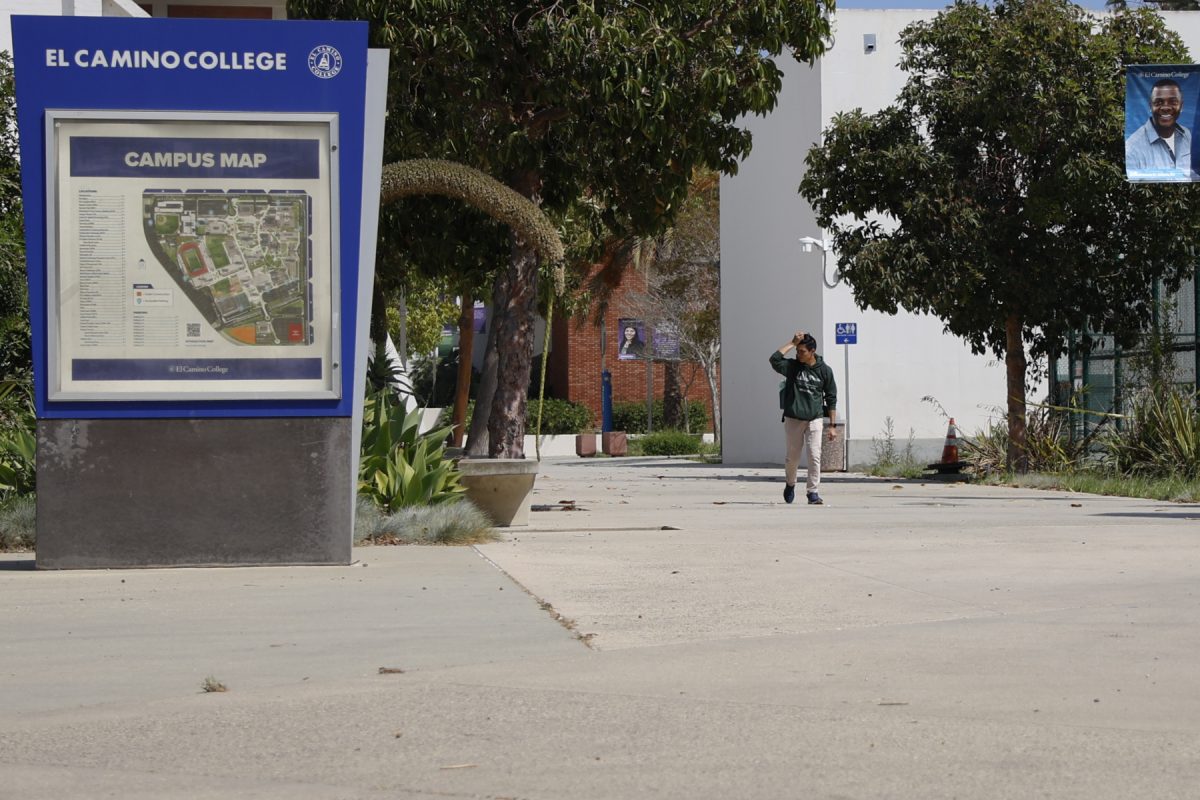
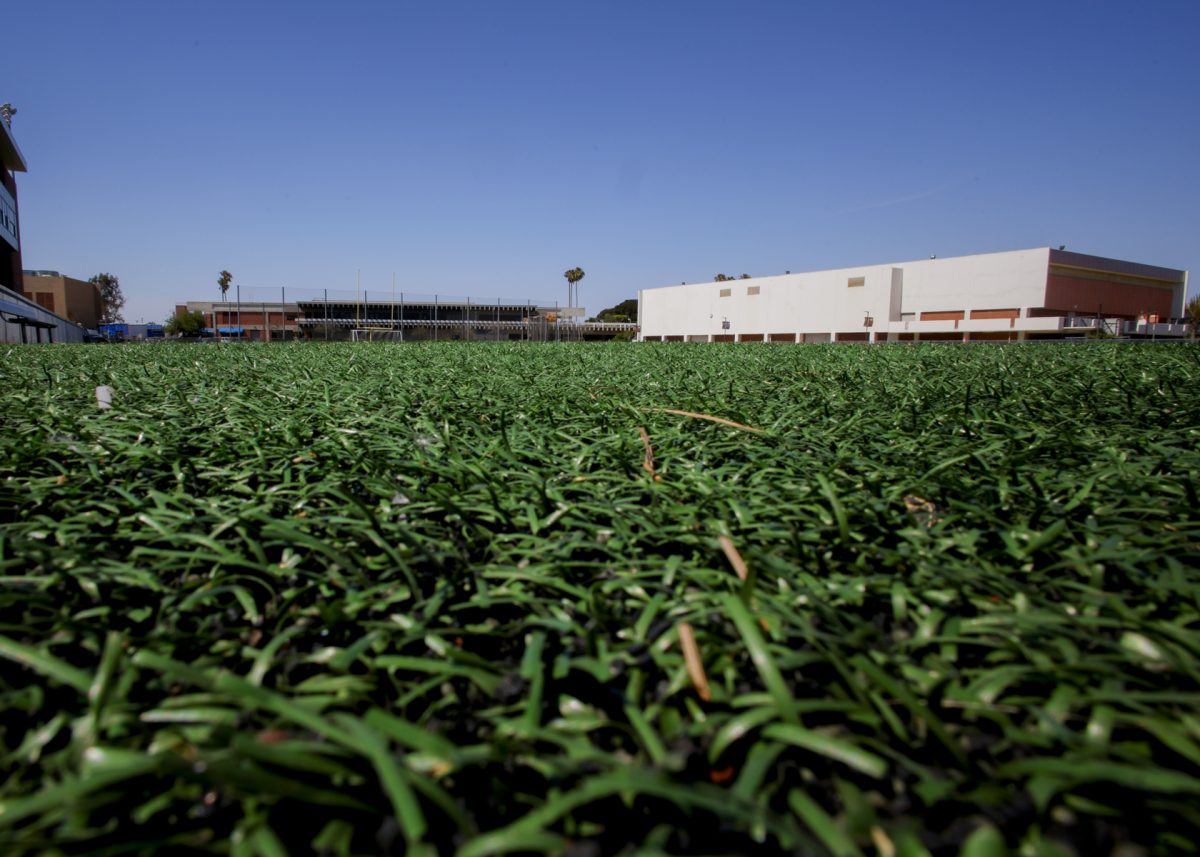
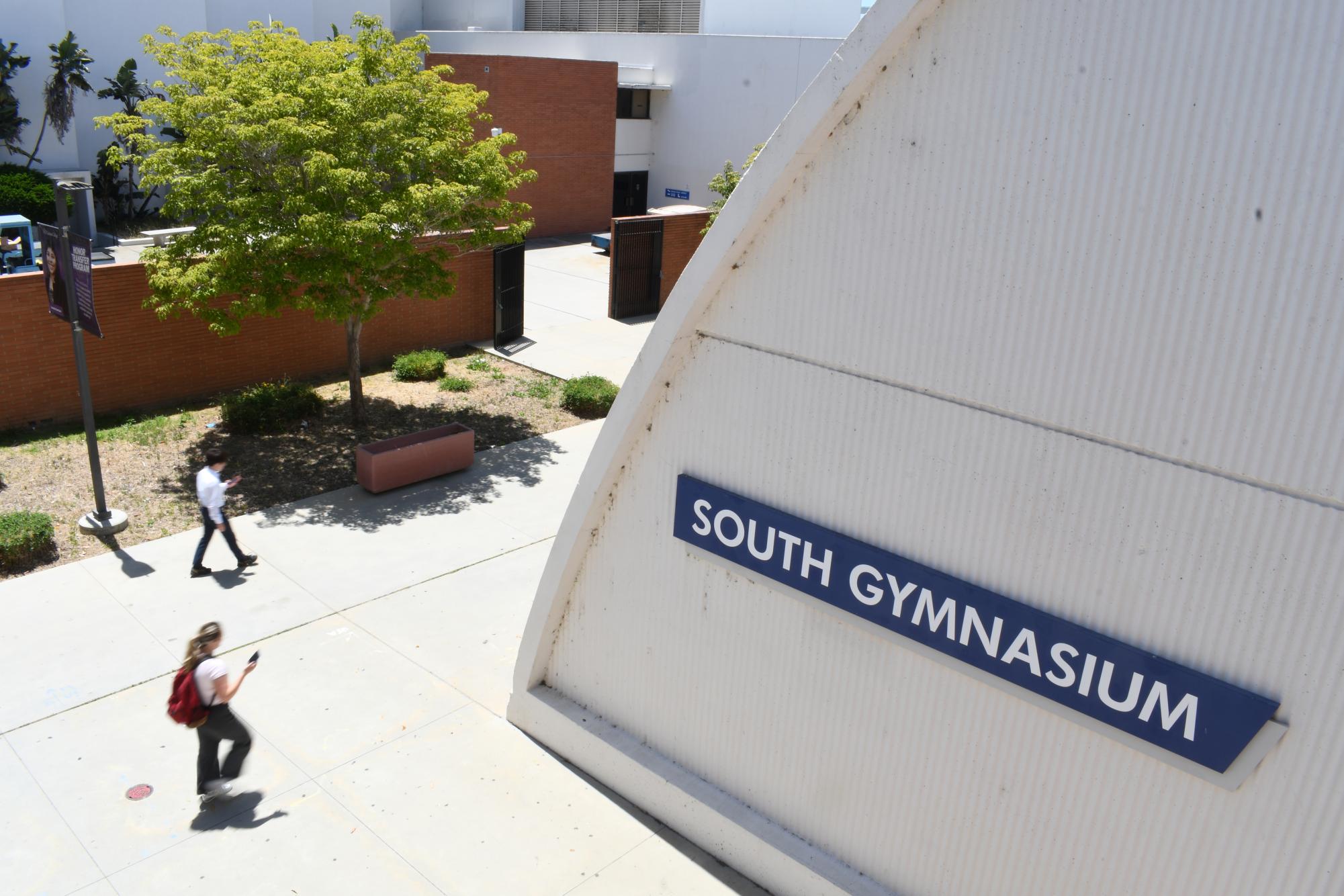
El Camino College’s South Gymnasium will serve as an in-person polling place for California primaries and local elections beginning Saturday, May 30, and ending the evening of Tuesday, June 2.
One federal, 11 state and three different county races will appear on Los Angeles County ballots, including a sales tax measure, during the primary election.
Voters residing in one of the county’s 18 congressional districts will also decide the U.S. representative candidates that will continue in the November midterms, and residents of Gardena and Torrance will have their city’s general election on their ballots.
“Voting is a right and it is a civic responsibility, and as a member of this community, the college is pleased to be a partner with the county registrar of voters to provide a place where voters can come and exercise that right,” Brenda Thames, ECC superintendent and president, said.
Any Los Angeles County resident can vote at ECC’s polling location, which will be open from 10 a.m. to 7 p.m. Saturday to Monday and 7 a.m. to 8 p.m. on Tuesday.
In recent years, the campus has served as a voting center in the 2024 presidential primary election, the 2022 general midterm election and the 2020 presidential primary election.
Deborah Dawson, League of Women Voters Torrance chapter co-president, said that state and county officials carefully consider voting locations.
“There’s a lot of thought that goes into the process of choosing a site, and it’s constantly going on,” Dawson said. “They’re looking to not only choose sites and develop sites, but check on them during the voting process.”
Dawson said some people want to vote in person to experience the process, especially first-time voters.
“Now that you have a site especially on campus, I’m hoping more students feel comfortable about getting to campus and voting, if they want to vote that way [in-person],” she said.
Dawson, who met with ECC students during the Associated Students Organization events to encourage voter registration, said they wondered the most about the offices up for election.
“They were kind of overwhelmed by all the names on the ballot,” she said. “They were asking how to find out information on the governor’s race, and what were all these other races.”
She said her mission was to make sure students had information about their ballots through a basic guide, including the League of Women Voters Easy Voter guide, which explains different races in elections.
Teri Neustaedter, president of the League of Women Voters’ Beach Cities chapter, said it’s important for voters to learn about lesser-publicized races by taking time to look through the state’s sample ballot.
Neustaedter highlighted the state insurance commissioner’s office as one example.
“It is one of those jobs that, for the most part, nobody wants to talk about or know about, we don’t even want to pretend it exists,” Neustaedter said. “But it’s a very important job because it helps to regulate all of the insurance that comes into California.”
She said the insurance commissioner is the person people turn to when insurance doesn’t follow policies, especially after recent California fires, including in the Pacific Palisades and Altadena in January 2025.
Registered voters receive sample ballots in the mail, but can also access them online.
What’s being voted on
Eleven voter-nominated offices are on the ballot, including governor, lieutenant governor, secretary of state, controller, treasurer, attorney general, insurance commissioner, board of equalization, U.S. representative, state senator and state assembly members.
Al Muratsuchi, Democratic assemblymember and part-time ECC political science professor, represented the 66th district — which ECC is part of — for 12 years, reaching his term limit this year.
Muratsuchi is now one of the 10 candidates running for the nonpartisan superintendent of public instruction office, alongside Nichelle M. Henderson, Richard Barrera, Wendy Castaneda-Leal, Josh Newman, Sonja Shaw, Gus Mattammal, Franka Lara, Ainye Long and Anthony Rendon.
The superintendent of public instruction oversees the California Department of Education, which is in charge of the state’s K-12 public schools.
Six candidates are running to fill Muratsuchi’s former assembly seat, including Democrats Sara Deen, Shannon Ruiz-Ross, Scott Houston and Paul Seo, and Republicans George Barks and Jessica Zonia Maldonado.
The 66th district assemblymember is elected for two-year terms to represent most of the South Bay, including Alondra Park, Torrance, Gardena, Lomita, the beach cities and the majority of the Palos Verdes Peninsula.
Other races include county-level and city elections.
The city elections are not primaries — meaning they are finalized on June 2 and do not continue in November, unlike voter-nominated races such as for state governor.
Torrance and Gardena are the only two South Bay cities hosting their general elections with mayoral, councilmember, city clerk and treasurer offices up for election, according to the L.A. County Registrar-Recorder/County Clerk.
One third of ECC students live in either Gardena or Torrance, with the majority living in the latter city, according to 2024-25 data from the college’s Annual Factbook.
In Torrance, David Kartsonis — ECC graduate and former member of its foundation and citizen bond advisory committee — is running for city council against incumbent Jon Kaji, who met with Alpha Gamma Sigma students at ECC in fall 2025.
In addition to public offices, all L.A. county ballots will include Measure ER, which will increase sales taxes by .5% for five years to support health departments and services, according to Ballotpedia.
County offices on the ballot include the races for superior court judges, sheriff and assessor, a role which evaluates property values for tax purposes.
The U.S. Representative race for the 42rd district, which covers El Camino, includes Republican candidate Cristian Morales and Democrat candidates David Sedlik, Myla Rahman and incumbent Maxine Waters, who has held the seat since 2013. Waters hosted a town hall at ECC last year.
The 43rd district’s boundaries or political lean did not change as a result of the voter-approved Proposition 50 in 2025, which enacted redrawn maps for federal congressional seats.
Student government promotes voting
Ahead of the upcoming 2026 state and local primary elections, student-led efforts to increase youth voter participation are being recognized.
Outreach events, including “Pizza and Polls” and “Boba & Ballots” hosted by the Associated Students Organization to register voters and submit voting plans, have ranked the campus first among California community colleges in the Secretary of State’s Engage the Vote Championships, qualifying it for playoffs.
“We have never actually placed this high before as El Camino,” ASO Director of External Affairs Jocelyn Coenmans, 21, said. “We’re setting a precedent and hopefully being a role model, especially to other community colleges.”
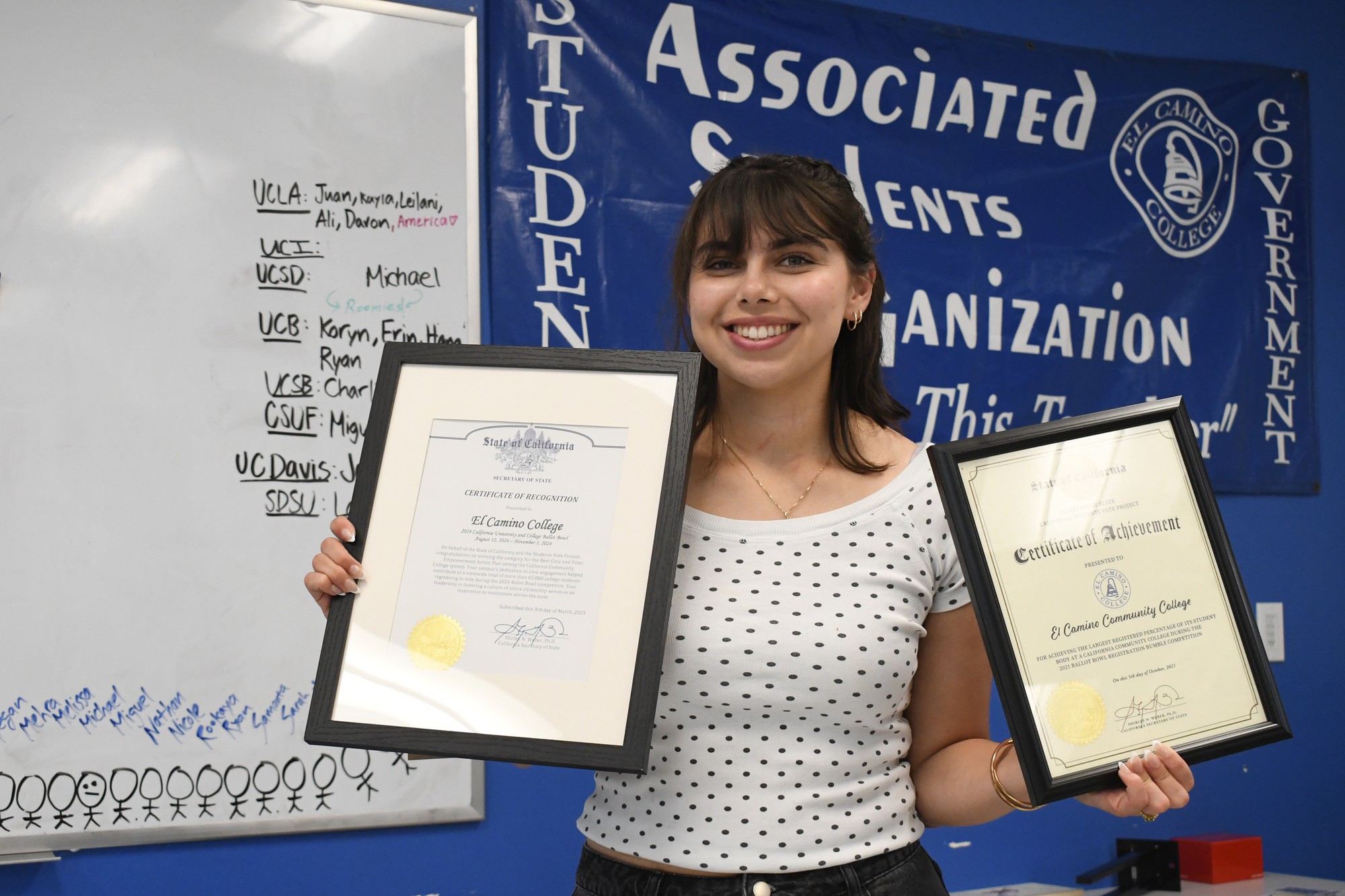
This year, Coenmans hosted nine outreach events to register student voters and create voting plans, leading the college to rank first among California community colleges and second in the state overall among all colleges and universities during the qualifiers from March 23 to May 18. (Nikki Yunker | The Union)
The championships are 10-week virtual tournaments hosted before primaries at California colleges and universities. Campuses compete for registering the most students to vote and getting the most student voting plan submissions.
Secretary of State Shirley Weber said Tuesday in an Instagram post that ECC would represent California community colleges in playoffs among four other institutions — the private University of Redlands, the California State University campus Cal Poly and the University of California, Riverside.
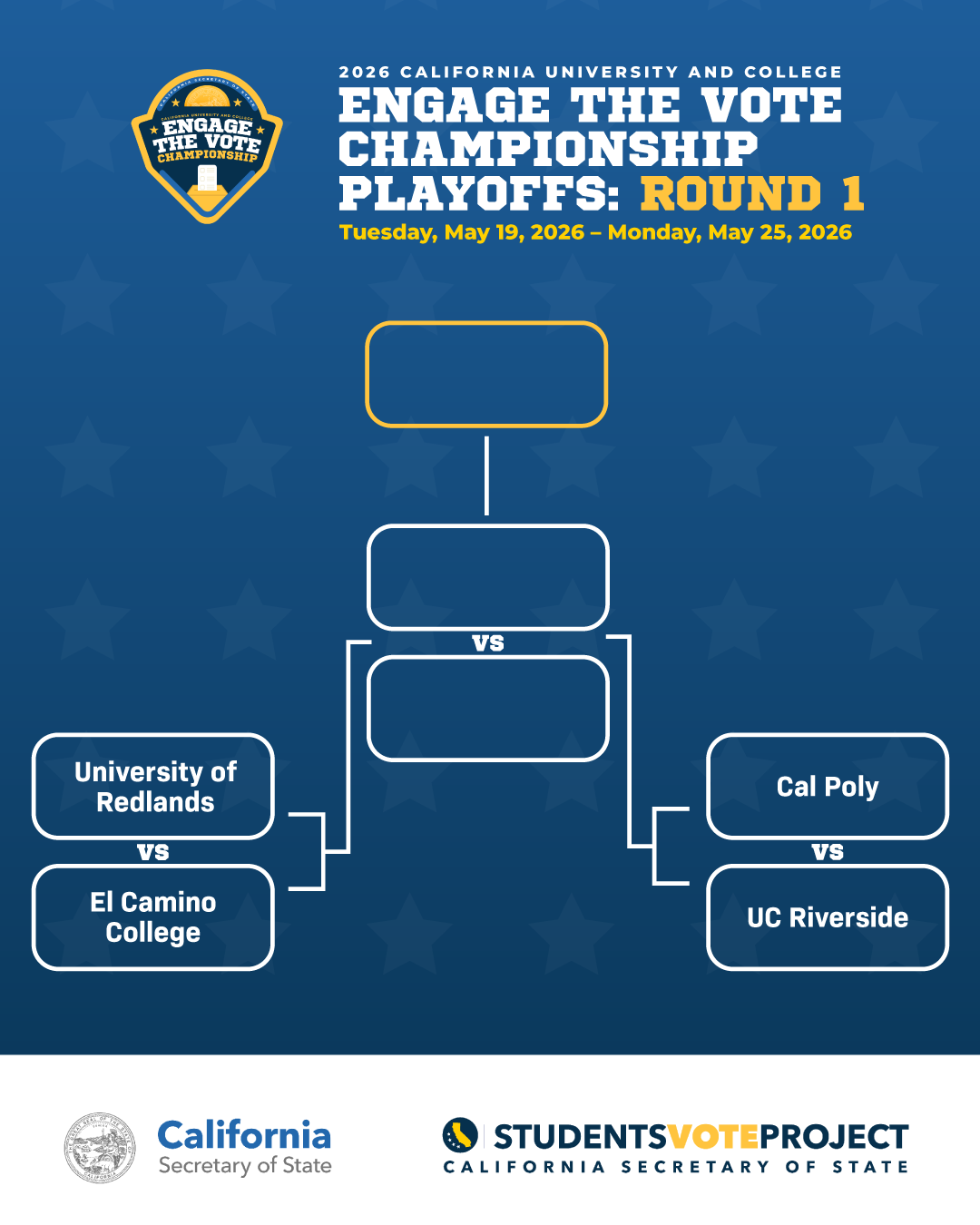
Advancing to the first round of the playoffs, each institution represents its respective higher education system — private, two-year, CSU and UC. Each school competes out of spirit, as the only rewards are certificates of achievement or recognition from the California Secretary of State.
“Our ASO representatives are doing a wonderful job of getting the word out about the importance of voting, and the fact that our students are recognizing that their voice is critical in participating in our society,” ECC Director of Public Information Kerri Webb said.
Coenmans said about 900 students participated in the Library Lawn-based outreach events, where students could get free food or drinks by registering to vote and submitting a brief form detailing when, where and how they will vote.
“It starts off with ‘Hey, can I get like a slice of pizza,’ and we’re ending it with sending them home with a voter guide, and getting them with a plan and registering to vote,” she said, adding, “You are significantly more likely to actually vote if you know how you’re voting.”
Coenmans said ASO has only hosted one or two events during championships in the past, but this time organized nine, costing about $1,600, as she is passionate about encouraging students to vote — and embraced the competition.
“Sometimes I’ll be sitting there with a student for like 15 minutes trying to help them figure out how to register to vote, get all their information — but at the end it’s so amazing because we have a brand new voter,” Coenmans said.
The qualifying period ran from Monday, March 23, to Monday, May 18. During that period, 0.03% of ECC’s student body was registered to vote and 0.62% submitted voting plans. Statewide, these numbers came in second to the University of Redlands, where 0.03% of its students were registered to vote and 3.76% submitted voting plans.
In the past eight years, ECC has won recognition twice — in 2021 and in 2024 — as a California community college.
This year’s championships end on June 2.
Coenmans collaborated with the League of Women Voters’ Torrance chapter, which advocates for informed civic participation, to provide voter information at the tabling events.
The Torrance chapter of the nonprofit organization has collaborated with ECC in the past, but this was the first time members participated in multiple events.
Dawson attended five times to provide students with voting information.
She said the majority of ECC students were already registered voters but needed help with, or had questions about, the voting process.
The student perspective
Psychology major Emily Monzon, 22, is taking a political science course and said she plans to vote in the June 2 primary.
“I was learning about [voting] in class and [professor Van Cheney] brought up a lot of major, good points that we need to start acting now on it because it’s going to benefit us more in the future,” Monzon said.
Previously, Monzon didn’t know about politics and relied on her mother for whom to vote for.
“Now that I know more, I’m like, ‘Wait, I need to get involved.’ This is going to affect me and my future, my kids’ future and so I need to start doing something,” she said.
She’s most interested in voting for the governor, a race with 61 different candidates, but hasn’t decided on who to vote for yet.
“I think I definitely need to look at their backgrounds,” she said.
Computer science major Mariano Hernandez, 27, said the last time he voted was in 2016.
“Maybe it is apathy, I just don’t feel like my vote really matters or I can make like much of a difference,” he said. “The experience of it as an individual still doesn’t feel very meaningful.”
Hernandez said if he were to vote in the future, he would use ChatGPT to research candidate backgrounds.
Undeclared major Ja’si Harvey, 18, has not registered to vote.
“It just doesn’t really interest me in that kind of way,” Harvey said. “Maybe if I — I know this is going to sound crazy — felt more affected, I probably would have a much stronger opinion.”
Adults between 18 and 25 years old represent 10.41% of registered voters, according to the L.A. County Registrar-Recorder/County Clerk.
The population with the greatest number of registered voters, at 18.06%, is those between 36 and 45 years old.
Harvey, who lives in Carson, said he was trying to figure out what to prioritize as a college student.
“I don’t know if I should just focus on the ups and downs of this [being in college] when I have to think of the ups and downs of myself and my situation,” he said.
Neustaedter said that it’s very common for students to be more worried about school and figuring out life, which makes them less engaged in voting.
“A lot of younger voters, say 25 and under, it just doesn’t come up on their radar, especially a primary, just because there’s so many other things that are going on,” she said. “We would love to see that trend change.”
She said the only way a difference can be made is by being more involved on campuses with advocacy efforts.
“Voting apathy, or just not caring about what’s on the ballot, is so prevalent, especially among young people, because they don’t know it’s there, they don’t know an election’s happening,” Coenmans, a political science major, said.
Both Hernandez and Monzon, who both live in South Central L.A., said there are aspects of their communities they would like to see changed.
Hernandez said cleanliness issues are the main problems in his neighborhood, as well as a lack of quality public transportation in the L.A. area, while Monzon is concerned about homelessness getting worse in Watts.
“Get out there and vote, it’s so important, especially with local elections, primaries coming up; the time to vote is now. It’s not just in a presidential election, it’s every single election,” Coenmans said.
Voter resources:
LAVote.gov — County site for election information, voter registration and status, voting locations, sample ballots and guides
Ballotpedia — Nonpartisan, nonprofit site for election information and candidate biographies
Calmatters Voter Guide — Nonpartisan, nonprofit guide for California primary election insights and facts
Vote411 — Nonpartisan, nonprofit site from the League of Women Voters for election information by state
Editor’s note:
- Photo added Thursday, May 21, at 9:37 p.m.
- Links updated, Engage the Vote Championship percentages added and additional information on elections clarified Friday, May 22, at 12:48 a.m.