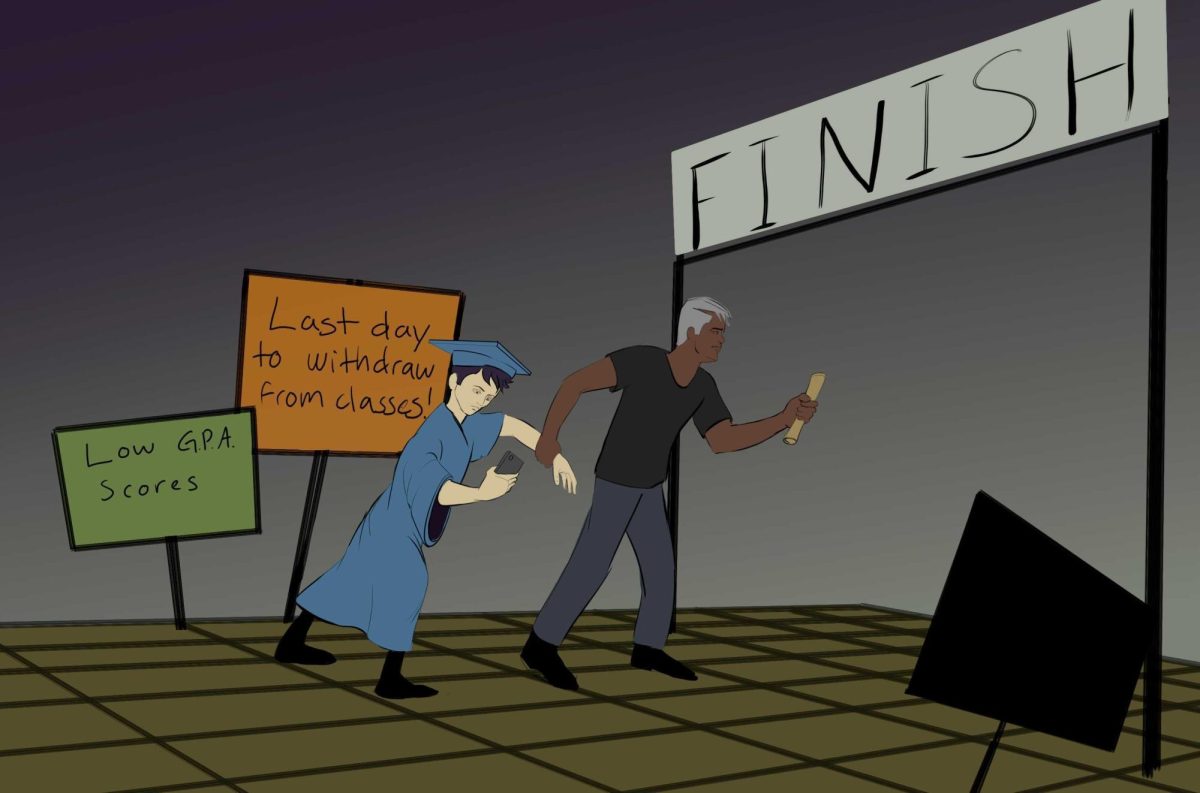
It is now past the middle of the spring semester, and class drops keep rolling in as we approach the final day to receive a “W” on transcripts this Saturday, May 16.
“When you have all these other things going on, it’s like, I got to take one thing off my plate and it might be a class,” Director of Tutoring and Academic Support Sheryl Kunisaki said.
The cost of living crisis in California is a tale as old as time.
A third of California residents do not make enough to support their basic needs.
Students add to their abundant plates of coursework by working part-time or full-time jobs or assisting family needs to help cover those basic needs and to pay for college.
It is proven to affect a student’s likelihood of completing their certification within six years.
As a result, it is easier to drop out for the semester or even indefinitely.
At the start of the 2023-2024 term, 43.1 million individuals were nationally reported to have enrolled in college and left without receiving certificates or degrees, according to the National Student Clearinghouse Research Center.
Nevertheless, retention rates at El Camino College remain consistent, averaging around 84% for fall and spring terms dating back to 2017, according to the California Community Colleges Chancellor’s Office Data Mart and that includes an outlying 99% retention for the spring 2020 semester.
Santa Monica College shares similar retention rates averaging 87% retention, including various semesters with 90% or more retention during the pandemic, which is a result of colleges fighting to retain enrollment during the lockdown.
Psychology professor Julio Farias said he felt he needed to pass students along during that time because there were so many individual hardships he needed to navigate.
Some professors would agree that the lack of communication and human interaction could be the cause that’s affecting the learning experience, class success and retention rates.
Computer informations systems professor Richard Perkins has worked full-time at ECC for over a decade who said he notices when his students don’t communicate with him or the peers in class.
“They don’t ask for notes between each other, or network amongst each other and they don’t ask as many questions during lectures,” Perkins said, describing the social academic changes.
In many ways, the pandemic has reshaped learning environments through hybridized classrooms and student interactions.
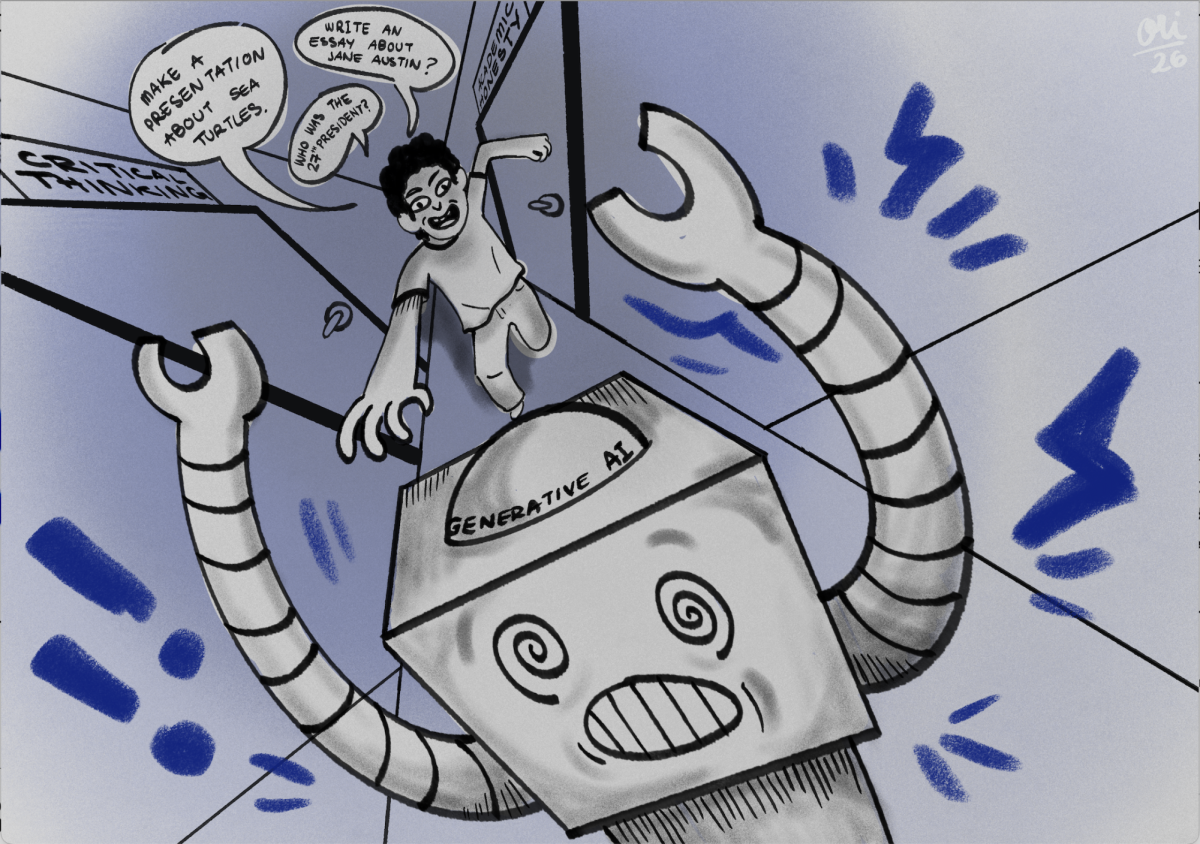
Even with in-person classes, students are still expected to reference online learning modules, videos, quizzes and more, all through their digital devices such as phones and computers.
Today, there limited reasons to build human to human interaction.
Most students The Union interviewed shared the sentiment that external responsibilities such as keeping up with their jobs on top of school is what affects their decisions to drop or has caused them to fail classes in the past.
But, with over half of the semester completed, it would be a waste of time, energy and money to give up now.
Students need to work with their professors, talk to their counselors, and utilize the tutoring centers to stay on top of their work because it is never too late to make a comeback.