Growing up, I never saw myself on the big screen.
Not in television, not in movies, not anywhere in the media.
Anytime my people were visible, we were diminished into racist jokes and stereotypes like gardeners or characters with exaggerated accents like Sofia Vergara.
We were depicted as labor workers but never as doctors, lawyers or scientists.
Hispanic people are the largest racial minority in the U.S., making up 19.5% of the population according to the U.S. Census Bureau, but they never seem to have the media representation as expected.
Because of the ignorance portrayed on television, many Latinos were constantly grouped into the same majority: “Mexican.”
Being from Los Angeles, I always heard, “Where are you from?” and “El Salvador — where is that?”
I always felt as if my culture wasn’t as important to others as it was to me. My El Salvadoran identity was always being erased.
My ethnicity will always be important to me. Not only is it a part of my life, but it’s part of my family’s as well. I didn’t enjoy feeling like my family was being erased alongside my customs.
When I was in primary and secondary school, many of my classmates would make fun of the way I spoke Spanish.
I had a different dialect from theirs.
I sounded “too Salvadoran.”
Some would say it was too ghetto or that I sounded uneducated.
Eventually, I just stopped talking Spanish at school, especially to my non-Central American friends.
My Central American friends, however, were the only ones who understood my Spanish and knew how it felt to constantly be made fun of for their culture.
I spent a lot of time irritated that some of my classmates couldn’t understand the thought of different Latino cultures existing, but as I got older, I just learned to let it go.
I was 14 when I first experienced racism.
My brother and I used to take the bus to school. He bumped into an older woman by accident.
Following his apology to the woman, she called us “dirty Mexicans’’ and “wetbacks.”
She continued to yell at us for 15 minutes straight on a full bus.
Taking the bus to school was normal for me, but being called slurs on it wasn’t.
I wasn’t ignorant. I knew that there were people who didn’t like us.
Living in South L.A., I always thought we minorities stuck together, since people of color make up at least 56% of the area, according to 2020 U.S. Census Bureau data.
So to be discriminated against by another minority in the neighborhood I grew up in was an odd experience.
Many emotions passed me after I had realized what had happened.
Once again, I had been grouped into the Mexican majority. But that’s not what had bothered me the most during the encounter.
Being called degrading words is what disappointed me the most. I grew to wonder how people can be so prejudiced.
Never once growing up did I think of discriminating against others, so why would others discriminate against me?
With the thought of so much negativity around me, I started having second thoughts about how successful I could become.
Ethnic minorities were historically excluded in powerful media industry positions and their voices absent in mainstream content, according to 2015 research by Riva Tukachinsky, a professor at Chapman University in Orange.
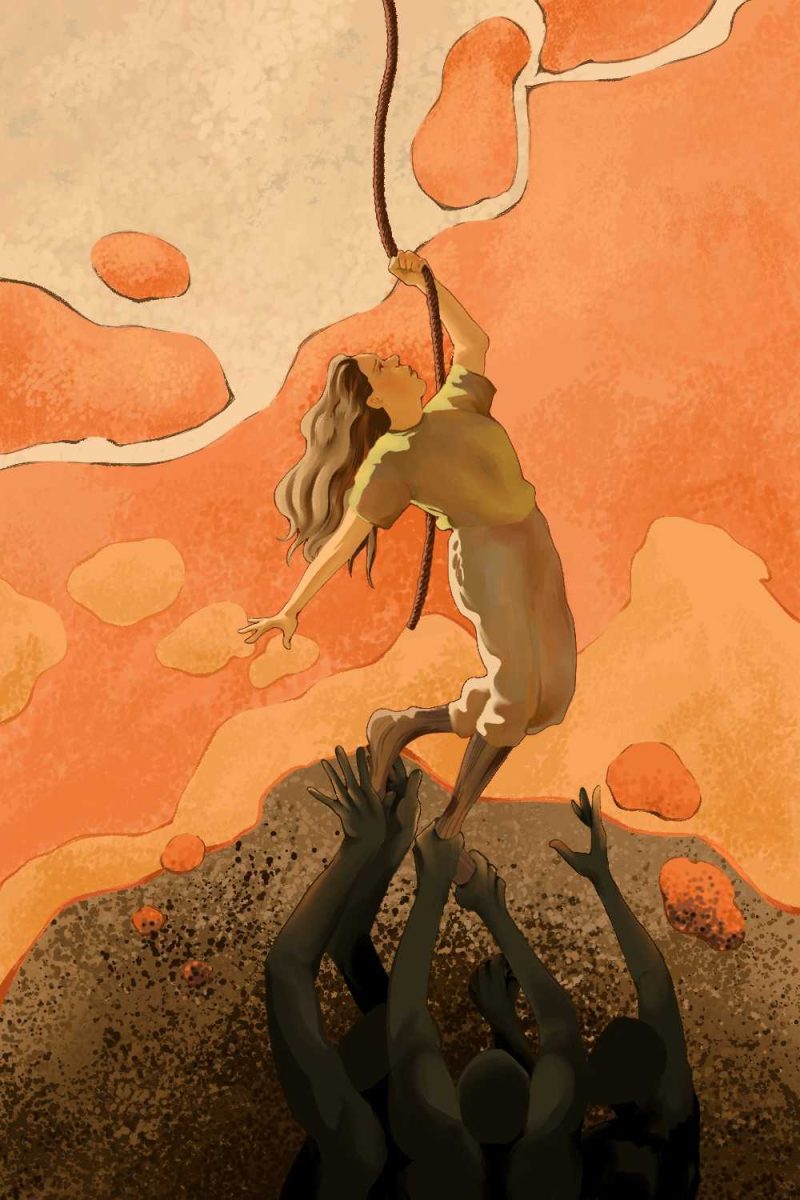
Nothing was uplifting me but myself. The law didn’t defend me, nor the media, nor society.
Even so, I began to realize Latino success was everywhere, and that I just wasn’t looking in the right places.
Politicians, artists, actors, and more are proving that Latinos can be successful in everything.
Role models including U.S. representative Alexandria Ocasio-Cortez have impacted the Latino community greatly. She’s a reminder that we can achieve anything.
Musical artists such as Bad Bunny and Kali Uchis also began to showcase their roots more often.
They influenced many Latinos to be proud of themselves and their customs. The messages in their music made me comfortable enough to embrace my roots again.
The recent Super Bowl LX halftime show might’ve been a culture shock to many, but to Latinos like me, it finally felt as if we were seen and represented the right way.
We were seen successfully.
With all the walls meant to keep us out, Latinos continued to overcome those borders and show that we can also be part of something special.
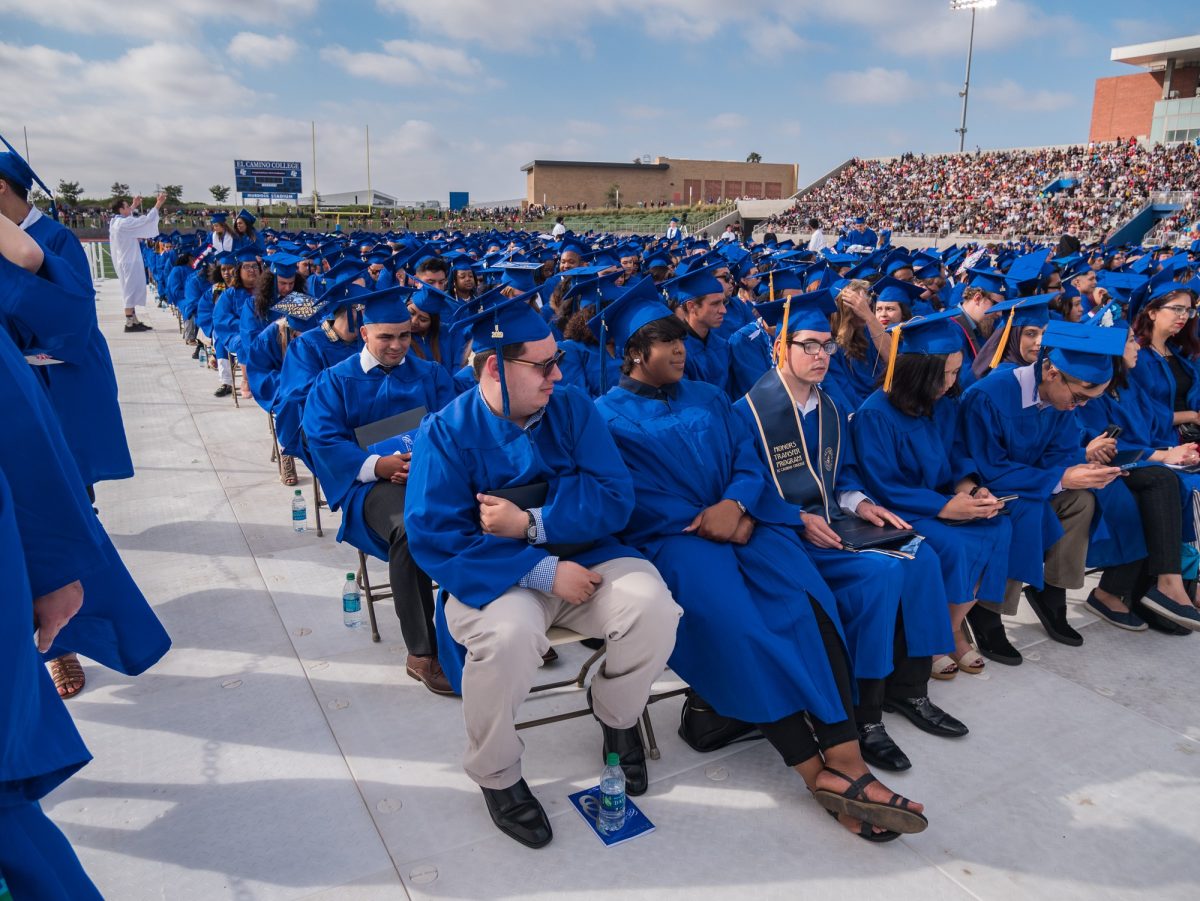
Personally, after seeing their impact, I’ve become more driven to be successful as well, knowing one day I’ll join the rising 20.8% of Latinos who received a degree, according to the Postsecondary National Policy Institute.
What has driven me more than to be successful for my people is to be successful for my family.
My biggest supporters through all my endless struggles are the same people I hope to one day give back to, and one day do even more for than they’ve done for me.
For them, I hope to show them the Latino excellence I continue to see.