Immigrant and undocumented El Camino College students have felt less safe on campus amid Immigration and Customs Enforcement activities occurring in Los Angeles since June, college staff said.
A Sept. 8 Supreme Court preliminary ruling in the case Noem v. Perdomo has allowed Immigration and Customs Enforcement to conduct stops and questioning based on a person’s race, language and occupation.
Josefina Cruz, Dream Resource Center student success coordinator, said students are going to classes and then returning home, not staying on campus longer than necessary.
Faculty and students are “surviving day by day,” Cruz said.
Staff and students have taken proactive measures to ensure their safety, including requesting online meetings through Zoom instead of being in-person.
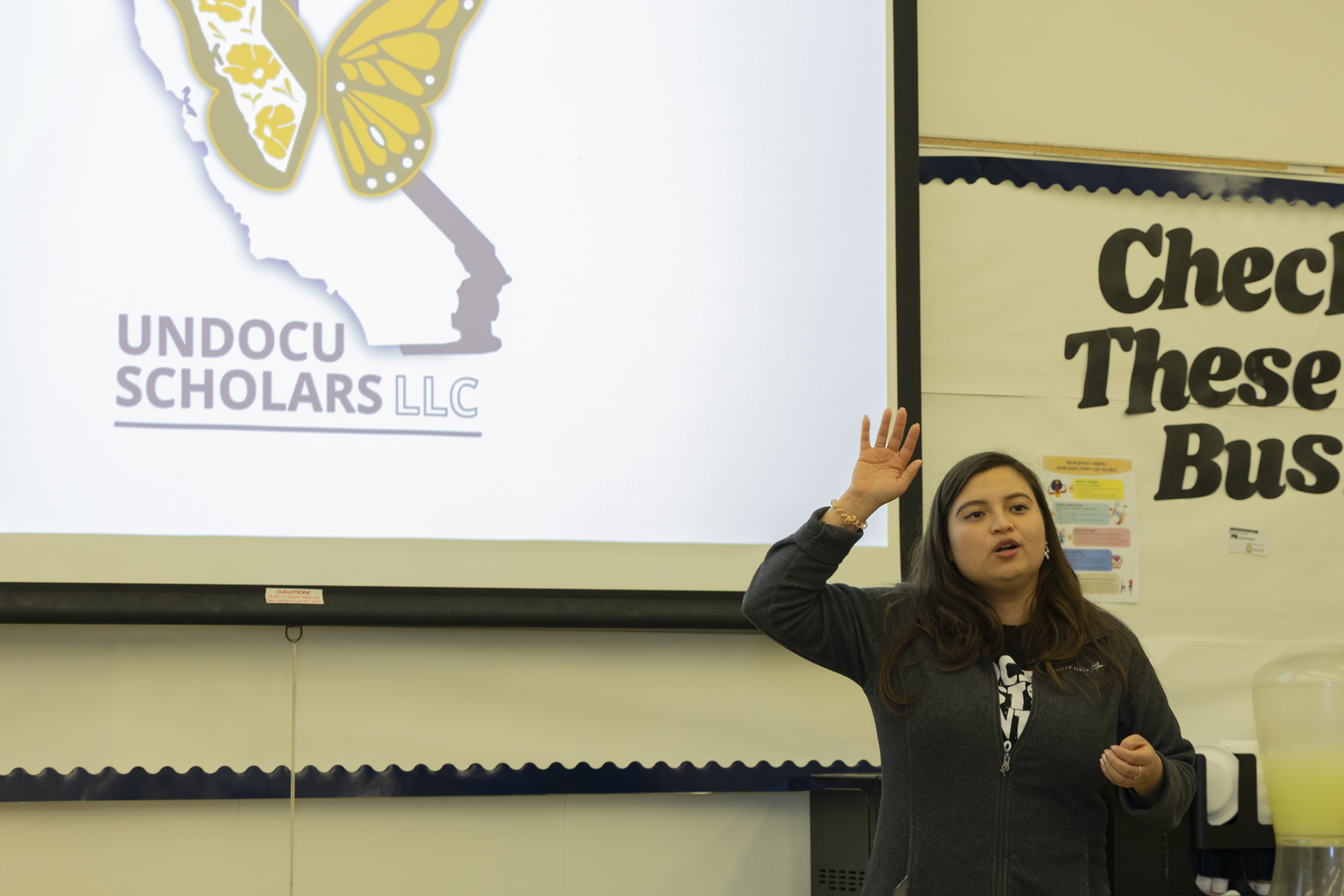
“We’re trying to do is make sure that we are providing a safe space to students, to employees at the college and trying to provide as many resources that we can,” Jeff Stephenson, vice president of equity and student services, said.
Stephenson said that people uncomfortable with attending Commencement have the option of viewing it by live stream.
Cruz said that English as a Second Language classes have been more filled this semester as people are trying to learn the language to reduce their accent and therefore become less of a target.
ECC provides undocumented and immigrant students with financial, legal and emotional resources through counselors at the Dream Resource Center, who guide students through aid programs.

This semester, the center was renamed from the Immigrant Student Success Program, and the UndocuWarriors club became the United Warriors club, respectively.
Cruz said removing the terms “undocumented” and “immigrant” calls less attention to the programs.
The United Warriors meet weekly to provide support, resources, networking and mentorship to all immigrant students.
Chemical engineering major and club board member Shela Esquivelzeta, 18, said the club’s members are from various places and are in different stages of the immigration process.
“I feel pretty safe on campus because there is such a strong support for our community,” Esquivelzeta said.
“Know Your Rights Cards” are also available throughout campus and inform students on a step-by-step process when interacting with ICE on campus.
Despite rumors of ICE agents being present at ECC during Commencement in June, ICE has not come on campus, Cruz said.
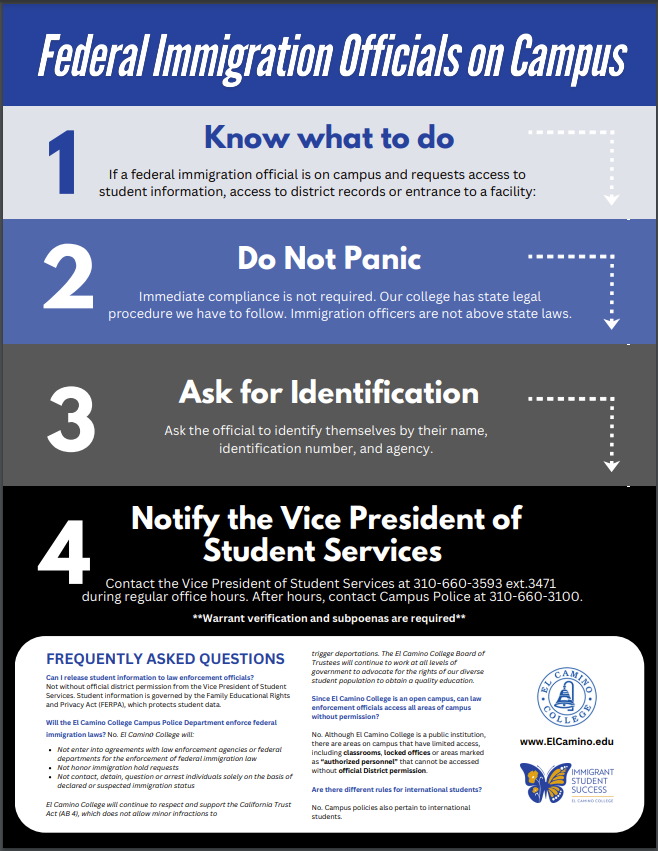
ICE agents are technically able to come onto campus according to Board Policy 3900, which states that ECC is a non-public forum with the exception of “areas generally available for use by students or the community.”
Regardless, Senate Bill 98 requires educational entities to alert all college personnel, including employees, faculty and students, of the presence of ICE.
A faculty member, employee or student would contact Stephenson who would ultimately contact campus police.
Additionally, Senate Bill 54 states that college entities are not required to provide data to immigration enforcement officers.
Despite fears, Hispanic Heritage Month’s kickoff event Tuesday, Sep. 16, received a massive turnout earlier this semester.
“It was like you’re being invited to the cookout,” Student Success Coordinator Monica Delgado said. “It was a moment in time where people felt they could just be joyful in public, and not feel fearful.”
The event featured a resource fair, food trucks, music and dancing.
Banda AZ was brought on to provide Banda music throughout the event which had attendees dancing hand-in-hand and hip-to-hip.
“There is not a single person in LA who isn’t at least one degree away from knowing an immigrant,” Delgado said.
A student interviewed for this story later declined their details and name being published in The Union due to safety concerns.
Editor’s note:
- This article was updated Thursday, Nov. 13, to update a term in the headline for accuracy.