Anonymous El Camino College faculty will randomly peer-review asynchronous online classes next semester after research revealed many professors were not interacting with their students enough.
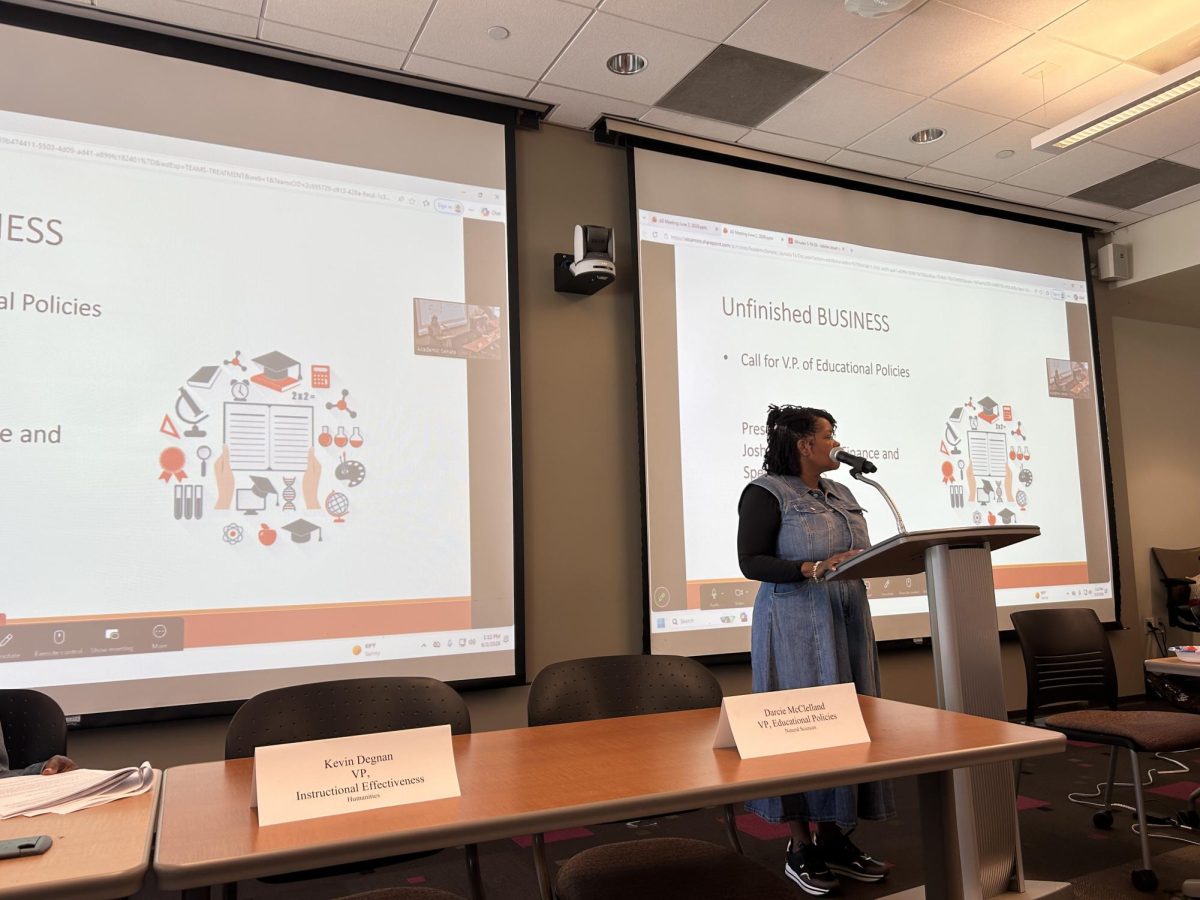
Moses Wolfenstein, distance education faculty coordinator, said at the Academic Senate meeting on Sept. 2 that the check-ins are a response to a campus study showing insufficient student and professor interactivity in online classes, according to the presentation.
“After our 2020 accreditation, we realized we had to do something,” Wolfenstein said.
In 2020, ECC received a recommendation from its accreditor to provide consistent “Regular and Substantive Interaction” in the college’s distance education classes, according to the presentation.
Out of the 30 online classes randomly checked, only 11 professors sufficiently communicated with students in alignment with the study’s standards.

The types of communications reviewed included pre-course contact, instructor-initiated contact, student-initiated contact, structured and unstructured student-to-student interactions, and “participation guidelines.”
All of the classes combined failed to achieve the 85% fulfillment rate required to demonstrate sufficient interactivity.
Business major Xavier Quiroz, 18, said professors teaching asynchronous classes should reach out more and check on students because it can be helpful.
“From my experience, I had a class online and my professor really communicated with the class, and they made announcements about what was due,” Quiroz said.
An anonymous review of randomly-selected online classes in spring 2026 will be conducted by ECC’s Peer Online Course Review team, which consists of faculty members trained to review online classes.
Individual class results will only be communicated to the faculty member whose class was reviewed, according to the study’s proposal.
The idea of the classes being reviewed came from Vice President of Academic Affairs Carlos Lopez.
“I came from Moreno Valley College and I brought up the idea because it was very helpful when I was there,” Lopez said.
The Union attempted to get more information from Lopez but he was in a rush to head to a meeting.

Faculty at the meeting voiced concerns that students’ grades are not up to par in the asynchronous classes and that students are not learning all class material.
Faculty also have concerns that students are saving course information to pass on to their peers for the next semester, so subsequent students just copy information and pass the class.
Wolfenstein said the idea of the classes being monitored is for both students and professors so students can pass their classes and for professors to guide students to make it simpler for them.
Some students feel that asynchronous classes should stay how they are because everyone is on different schedules and working on their own time is the reason why they take those types of classes.
Parks and recreation major Rodolfo Costaneda, 22, said he likes to work at his own pace.
“I feel like professors should only communicate with students who really need it, and if a student is doing fine in an asynchronous class they should let it be,” Costaneda said.
Some professors prefer the students to be on campus or live online so students can have a hands-on class experience and be focused on learning.
Argelia Andrade, a world language professor, said she prefers students on campus but she does teach online classes where she requires students to do oral presentations and final projects live online.
“I rather have students in the classroom because I feel like they do better when they are in class,” Andrade said.