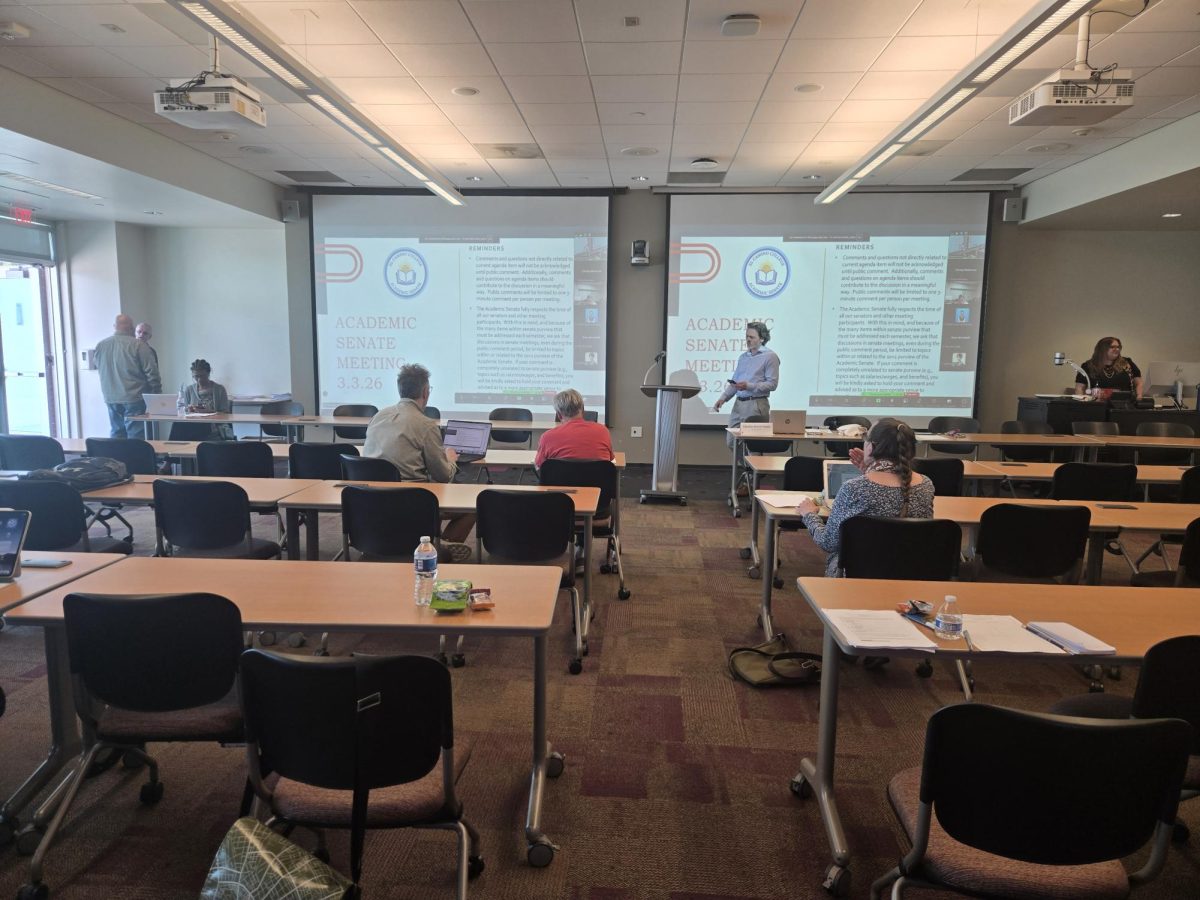
Lack of student privacy was brought up as a concern regarding the use of artificial intelligence tools in academic coursework at the Academic Senate on Tuesday, March 3.
Vice President of Academic Technology Stephanie Burnham created a resolution exploring the implementation of artificial intelligence tools in grading coursework to address common concerns with AI usage raised by faculty.
This resolution seeks to create transparent communication on faculty AI usage, while addressing the possible risks.
Human oversight and the Family Educational Rights and Privacy Act (FERPA) were the main points of discussion, as some AI software used for data analysis, chatbots and educational content could potentially retain the personal and sensitive data put into it.
Assessment of Learning Chairman Kevin Degnan encouraged this resolution, believing it to address risks of exposed student data and ensure faculty are properly trained with AI.
Degnan warns against using AI in multiple aspects.
“That is essentially giving up the most human aspect of our work, when so many of our classes are online now, giving that over to a robot,” Degnan said.
Although AI is becoming incorporated into academic learning structures, 68% of instructors say that their institutions have not prepared faculty for AI use in teaching, according to InsideHigherEd.
Burnham does not utilize AI as much in her classroom, but understands that other faculty may find it helpful.
“I feel like it’s a little counterintuitive to some of the things we do,” Burnham, who is also a full-time English instructor, said.
Burnham’s next steps for the resolution is to gather feedback on how to move forward with the use of AI in the classroom and online and come to an agreement. The resolution may be brought up during the next meeting on March 17, at 12:45 p.m. in the Distance Education Room.
Additional Information discussed at the meeting:
- The Financial Aid Lab is in the process of moving into the Warrior Welcome Center. The goal is to simplify the application process.
- There are updated requirements to Title II of the Americans with Disabilities Act (ADA) beginning April 26, 2026. Title II ensures that all state and local governments follow ADA requirements and not discriminate against disabled individuals. The updated requirements consists of improving accessibility of online services offered of an institution to people with disabilities.
- Enrollment services partnered with a research planning group to work on a project that is intended to help make registration, orientation and enrollment easier for new students.
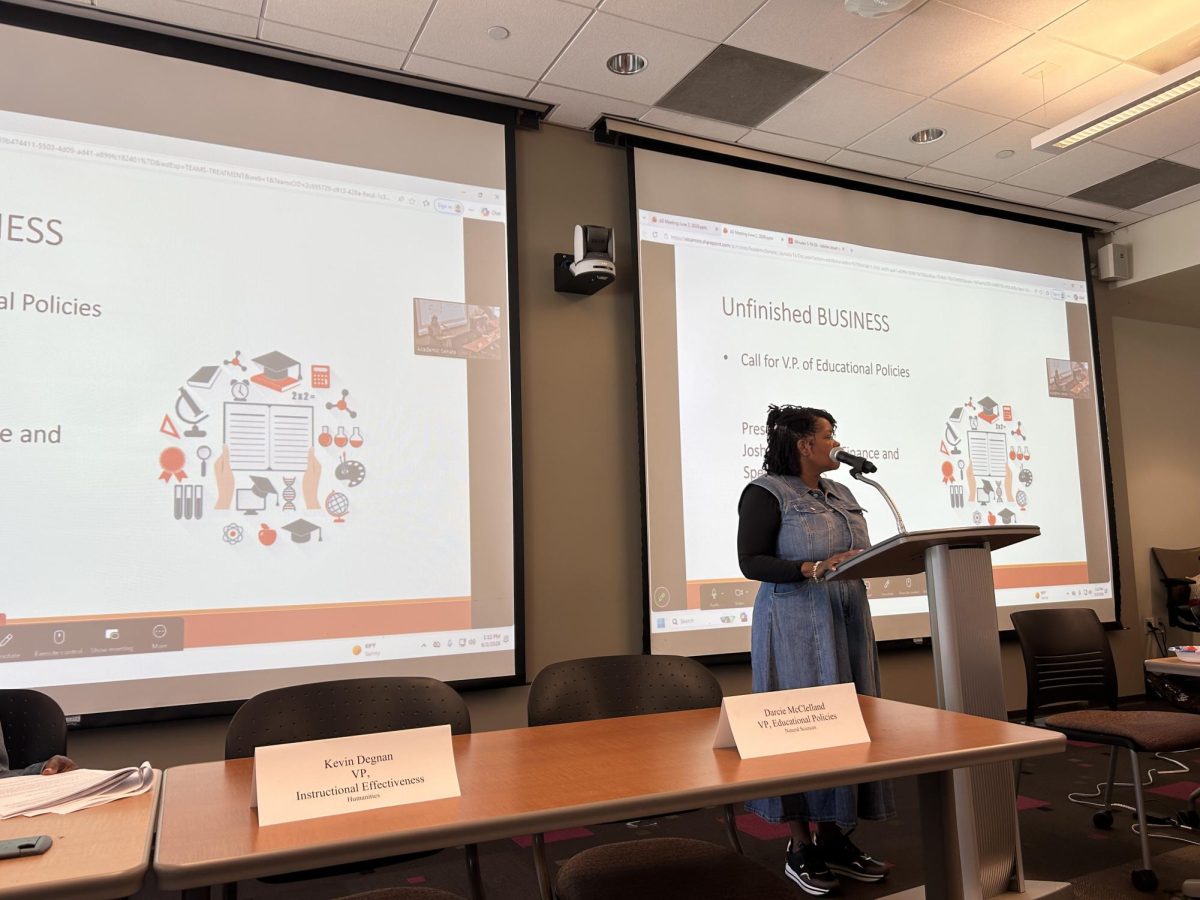
- Bylaw updates regarding the El Camino College Academic Senate constitution were brought up by Vice President of the Educational Policies Chair Darcie McClelland in response to recent changes in college governance and reconstruction of the Academic Affairs division. The updates include faculty proposed amendment changes that would affect the structure of Senate. “We really want to produce something that is best for all of, or at least a majority of faculty on our campus,” McClelland said.
*Editor’s Note: An edit was made on Monday, March 16 to correct a name in the caption.