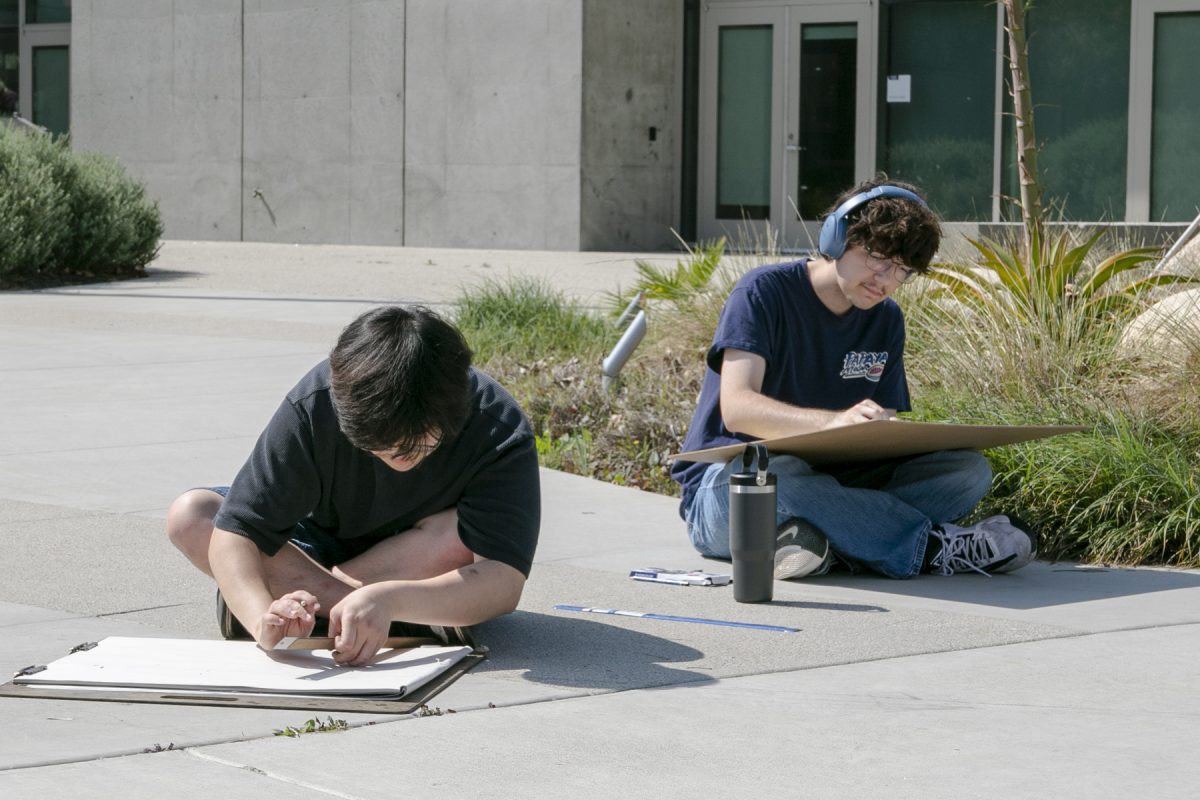
Studio art major Jeremy Engel, 19, ran his pencil along the canvas, outlined key anatomy points and shaded in the ribcage of the model during professor Randall Bloomberg’s Life Drawing class at El Camino College.
Engel taught himself to draw at home through YouTube videos.
In his sophomore year of high school, he moved to painting still life with watercolors and acrylics.
And now, when inspiration strikes, Engel pulls out his blue pocket-sized sketchbook and draws the people and places that pass him by.
Engel has dedicated years learning to master these techniques. However, artificial intelligence picked it up in a matter of seconds.
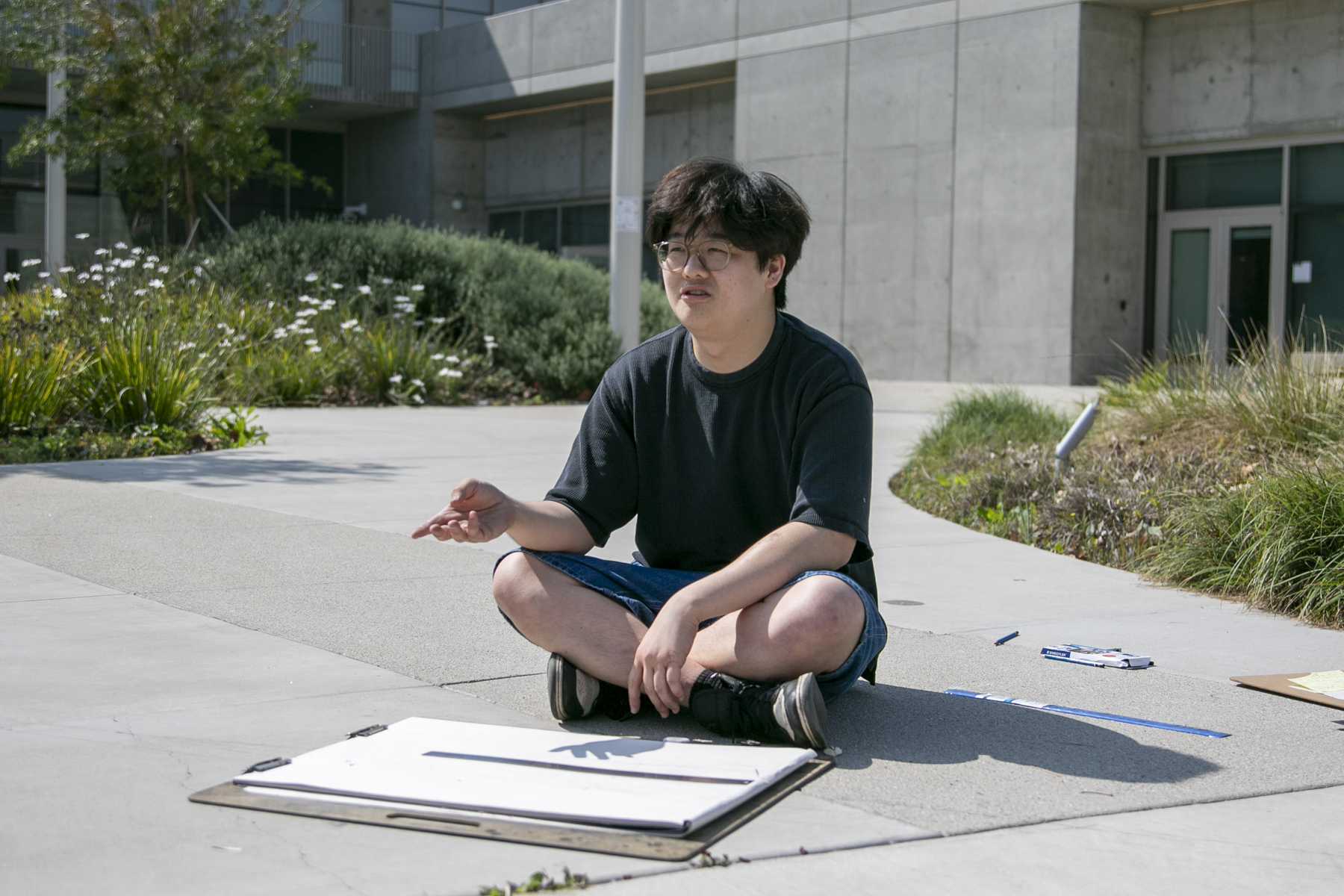
To some students and staff on campus, AI can add to the life of an artist, but for others, they don’t recognize AI-generated art as art. Over the past years, AI has dominated and infiltrated various industries and the art field is its latest victim.
NASA says AI is a computer system that performs complex tasks, normally accomplished by human beings.
Fine arts instructor Bloomberg said that it is a tool of the present and it will be a tool for the future.
“I don’t think we should be relying on it intensively….Nothing can ever replace a human hand or a human brain. Those tools are going to be able to produce some amazing things, but you still need an artist to direct it,” Bloomberg said.
A concern many artists have is how AI will impact the job market.
AI uses preexisting art to train its system to generate images and videos. The fear is that companies will look to AI as a cheaper alternative than hiring the real artists or real designers or real photographers.
“A big concern is job security. There are special types of AI models that specialize in copying an artist’s art style. It’s basically art theft, stealing other artists’ creative process,” computer science major Joshua Mendoza, 27, said.
Isabella Morillo, an artist completing a residency at ECC, has utilized AI as a tool to come up with her “Indigenous Futurism” painting and sculpture concepts faster. She believes it shouldn’t be used to generate final products but instead used during the planning process.
“AI isn’t going to make a person feel a certain type of way with their art. There’s no true originality and experience that has been created when making that art,” Morillo said.
Art major Gavin Walz, 19, said art is supposed to have a purpose.
“[Art] normally has a reason why someone wants to make it. AI art is just—it’s nothing. It’s soulless,” Walz said.
Photography professor Weng San Sit believes there are still jobs that AI can’t replace. She emphasizes that students should learn the fundamentals of photography because there will always be a demand for photographers.
”The industry is being affected by AI, but there will still be a need for wedding photographers, people who can capture memories for quinceañeras or birthdays,” Sit said.
So long as people feel they need to express themselves, then we will have art, studio arts major Alexia Franco, 18, said that humans need art to express themselves.
“Art is still going to exist, no matter what… human expression is very important,” Franco said.