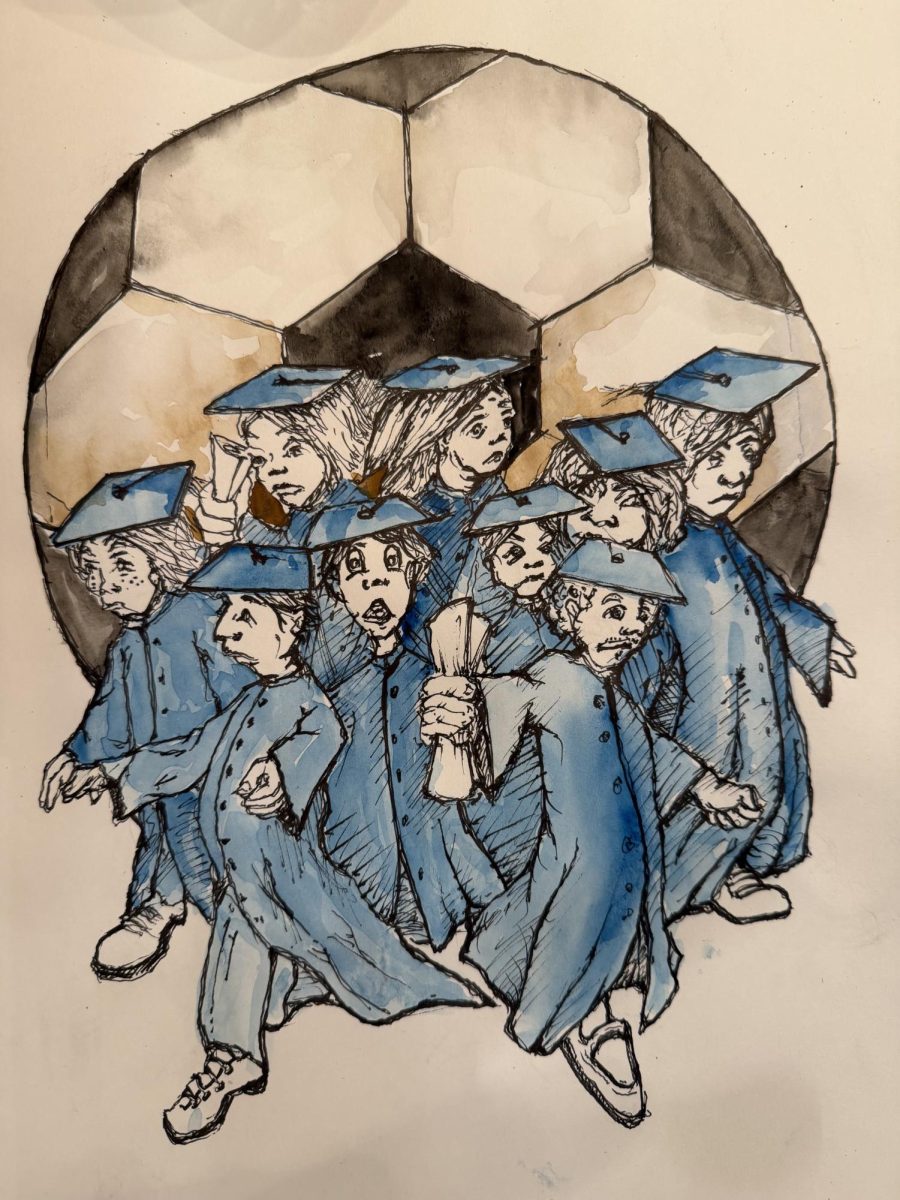
Many students claim to feel safe sharing their opinions on institutional grounds, but outside the context of studies conducted, the reality looks different.
The most recent Student Campus Climate Survey, released by El Camino College in 2024, found that many students reported feeling respected on campus and believed the college supports diverse perspectives.
The report highlighted generally positive perceptions regarding the campus climate. But, also identified areas requiring improvement in communication and inclusion.
When invited to speak about ideology, what it means and whether students feel comfortable discussing it, most people I approached declined to be interviewed. Some said they were busy, others hesitated and then chose not to answer.
After finding only one person who agreed to speak, this discrepancy raised a question: Is the campus truly open to discussion, or are students confining themselves to their own circles?
Before addressing whether people feel comfortable sharing their views, Beverly Burgess, a senior manager in prevention and assistance, began defining the word itself.
“I think ideology is a belief system that helps you understand the world,” Burgess said, “An opinion is just an opinion. It’s not a fact; therefore, we all have the right to have one,” she said after stating why she is open to different opinions, but then paused when reflecting on real-life situations.
“In some situations, yes,” Burgess said when asked if she had ever remained silent out of fear of being judged. “Sometimes, I feel that it might not be appropriate to share my opinion. I simply don’t want to have to deal with conflict.”
However, this hesitation is not an isolated case.
Studies revealed that many college students across the United States repress their opinions, especially regarding political or controversial topics, according to a report conducted in 2024 by the Knight Foundation in partnership with Ipsos.
Students describe college as a place of learning and growth. However, when conversations are restricted to groups of like-minded people, that growth can be limited.
Over time, students may begin to interact predominantly with people who share their views, creating what many term “ideological bubbles.”
Similarly, a 2025 study by the FIRE/College Pulse found that young adults have an increasing propensity to avoid political conversations, particularly with people who disagree with them.
Furthermore, Social Media Platforms such as TikTok, Instagram, and X have algorithms that create filter bubbles and echo chambers, which show users content that aligns with their beliefs by reinforcing what they already think and filtering out differing views.
In this environment, speaking up can feel risky, not due to formal consequences, but rather to consequences of a social nature. The result is a campus that may appear safe in opinion polls, but proves cautious in practice.
College classrooms are intended to challenge students with new perspectives. This process can be uncomfortable, but it is part of learning how to think and interact with others.
If, instead, students choose silence, the issue may not lie in whether they are permitted to speak. Perhaps the question is whether they feel it is worth it.